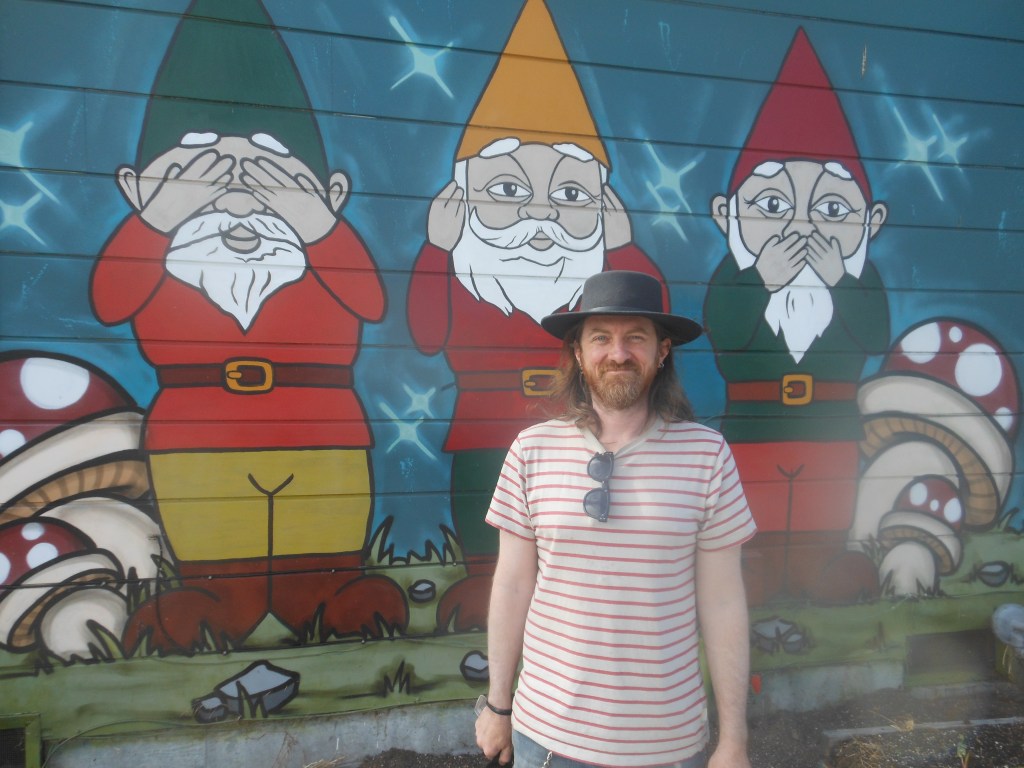
July 30, Cloverdale to Crescent City, 270 miles
We woke up at the Super 8 and everything was groovy—we were back on the road! We got coffee, breakfast, gas, Robert helping out a man with a gas can across from the station by filling his car. The man told us his Bus stories and thanked us as he had a doctor’s appointment he needed to get to and had run short of gas and money, and then we were headed north on the 101, a new journey for us, as we usually turn west on the 128 to head to Mendocino at Cloverdale, but now we needed to make up the miles to get us north to the memorial. The 101 north of Cloverdale was a great flying road, for I often think of the Bus as a plane, and even included that in my poem for my father, the one I would read at the memorial: “He drives his bus like he’s flying a plane,” only now it was Robert at the controls. We repeated the old mantras of all Bus trips: “Where’s the wheel? Under your butt.” “How do we roll? Slowly, steadily, safely.” And we even sang a bit of my father’s favorite Bus song, “Off we go, into the wild blue yonder, riding high, into the sun!” We flew past Ukiah (and did you know that Ukiah spelled backwards spells haiku?), and we passed yellow hillsides with summer dried grass, oak forests, serpentine outcrops, vineyards, the palette of Northern California.
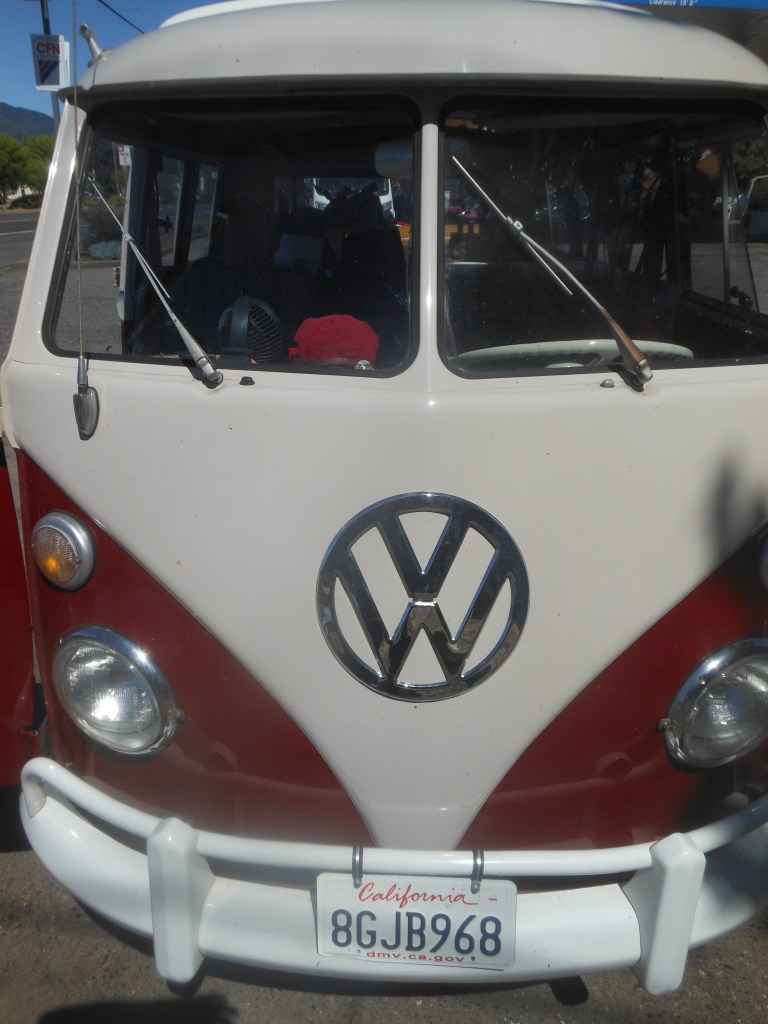
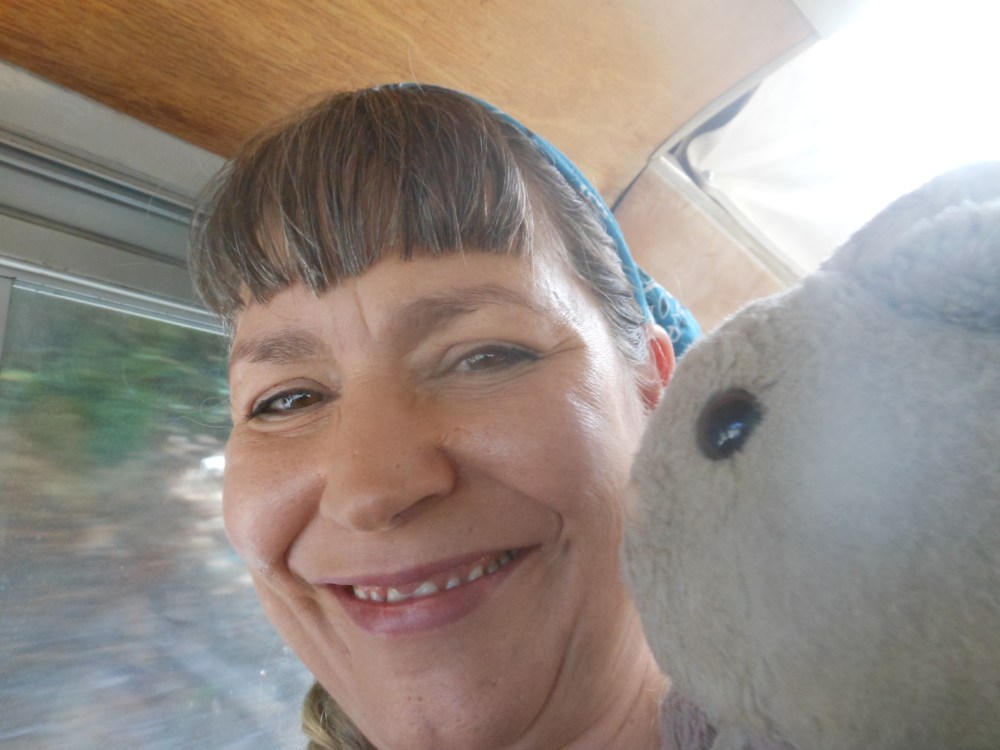
The Bus in Laytonville and jenny and Ollie on the 101
We got to stop in cute little towns like Laytonville for gas and postcards, a place we had never stopped before because we had always taken the 128, all with the goal of avoiding Garberville (see earlier and later posts regarding Garberville). However, all the way north we were dogged by stress, which for me meant stomach woes, and in Robert manifested in his need to buy gas compulsively, which was oddly reminiscent of my father, who experienced the 70’s gas crisis as a moral imperative to buy gas every chance he got. In the 1970’s I was a little girl, unfamiliar with the vagaries of the gas gauge and fuel sending unit in a vintage VW bus, but what I have learned since then from experience and some cryptic advice from my father can be summed up as follows:
- The gas gauge does not actually work, if work means telling you how much gas you have. That said, it does have a needle that fluctuates wildly.
- Something, something hippie hatch—apparently some fix for this that involves cutting a hatch in the Bus.
- Dad’s advice: “Don’t feed him too much or else he will throw up.”
- Those old busses, you just never know how much gas you have.
- 5 gallons or less per fill up, or else the gas will start burbling out and scare you.
After all this gas experience with the Bus, I also now know why my father obsessively calculated how much gas he bought versus miles driven on the metal dash of the Bus, writing in his mechanical pencil from the U.S. Forest Service.
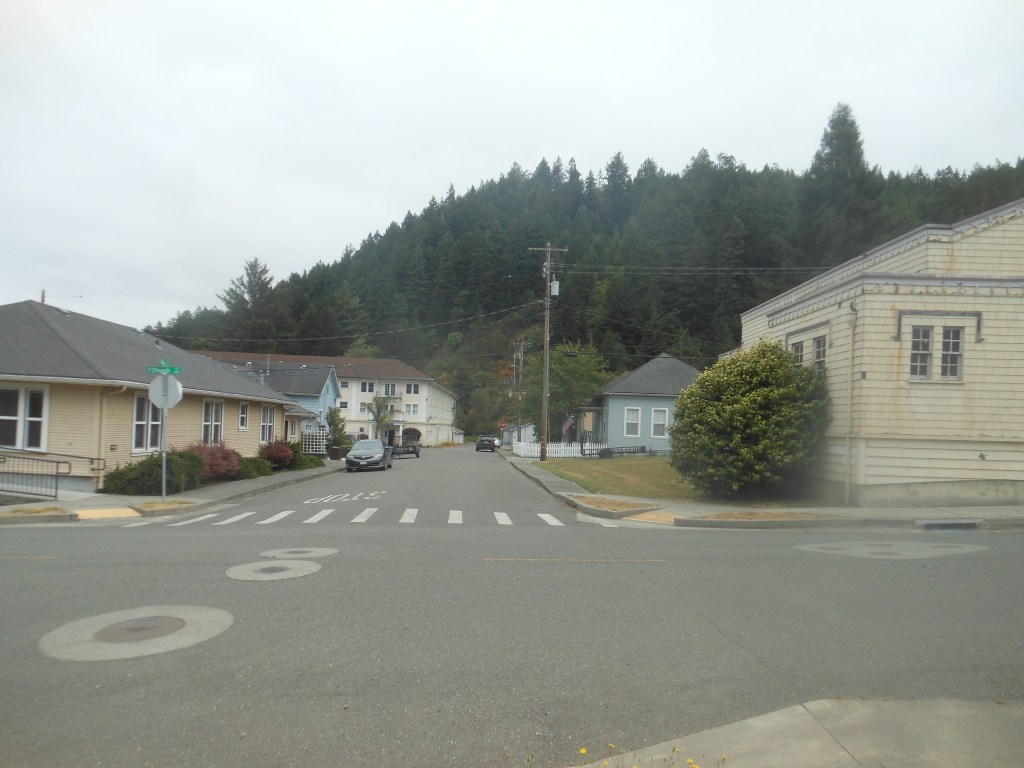
So, we were heading into the unknown lands of the upper 101 when we stopped in a gas panic in Scotia. Scotia was a logging town, a company town, which means a town owned and operated by a timber company, as it actually was when I first knew it. In the 2000’s it was sold to the people of Scotia. Company towns interest me partly because my father loved Hilt, the site of the old company town on the Oregon California border, and he had showed me that townsite in frequent trips as a child, and that even made it into my poem, too: “…it was a mining town till the lumber company came/now there’s no one left.”
We visited Samoa on another Bus trip, another company town, and the idea of the company owning a town of course hearkens back to my family history, for my father’s grandfather, D.C. Ford was a coal miner in the Cumberland gap, and because I often teach Octavia Butler’s prescient novel about a future California, The Parable of the Sower, which also features company towns. In fact, one of the last books I read with my father (as in I read it, gave him a copy, and he sent me a list of his thoughts about it) was White Poplar, Black Locust by Louise Wagenknecht, her memoir of growing up in Hilt. My father loved her books because she was in the Forest Service, too, and because she so clearly describes the land he first knew as a younger geologist stationed in Yreka, commuting to Ashland to return to my mother and later the baby version of me.
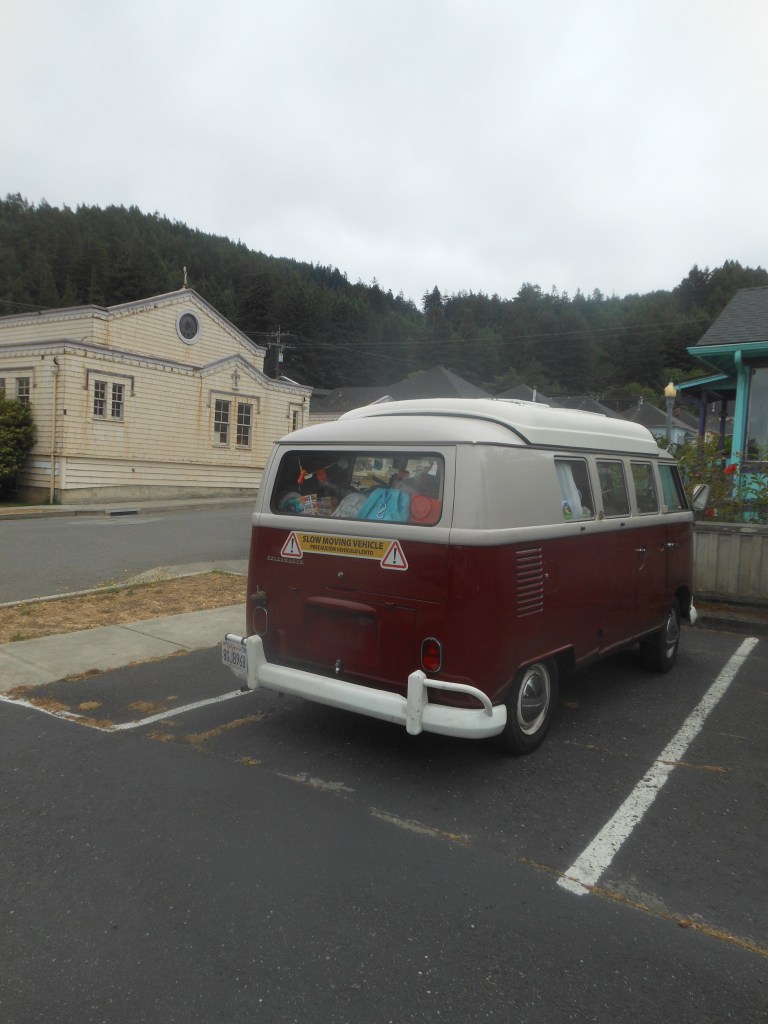
But there is something about these company towns that fascinates me, maybe the same thing that obsessed me with Pea Soup Andersen’s, the sense of one way of life passing on, or perhaps like Larry McMurtry I am just attracted to dying places, like his fictional Thalia. But there we were in Scotia, taking pictures, stopping to mail postcards, and yes, getting gas, and it was weird in the manner of such places, but we stopped at the local grocery store, and everyone was very friendly, and we got some nice pictures of the town and the Bus. FYI, info about Scotia linked below, and I had not read the new Yorker piece when I wrote this.

Jenny coming back from mailing post cards in Scotia, CA
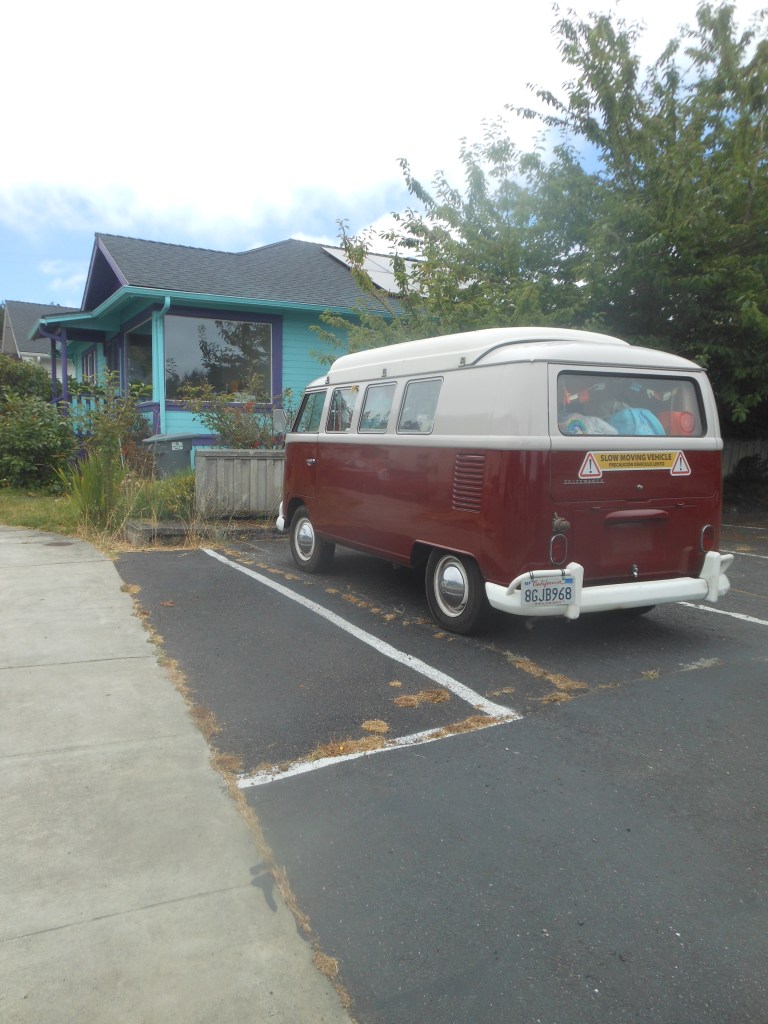
The Bus in Scotia!
Off we went, to Arcata and beyond, for lunch at Los bagels (Guacamole and lox for Robert, Veggie with olives for Jenny), and then we went to the awesome hardware store nearby, where we first visited on the inaugural Bus trip, and always return. We bought a new cast iron pan to live in the Bus with a Bear emblazoned on the bottom, so capitalism was achieved. Then we got groceries and headed north, and with every mile, my Bear-a-noia increased, for we were scheduled to camp at Del Norte that night.

Signs across from Los Bagels, Arcata, CA
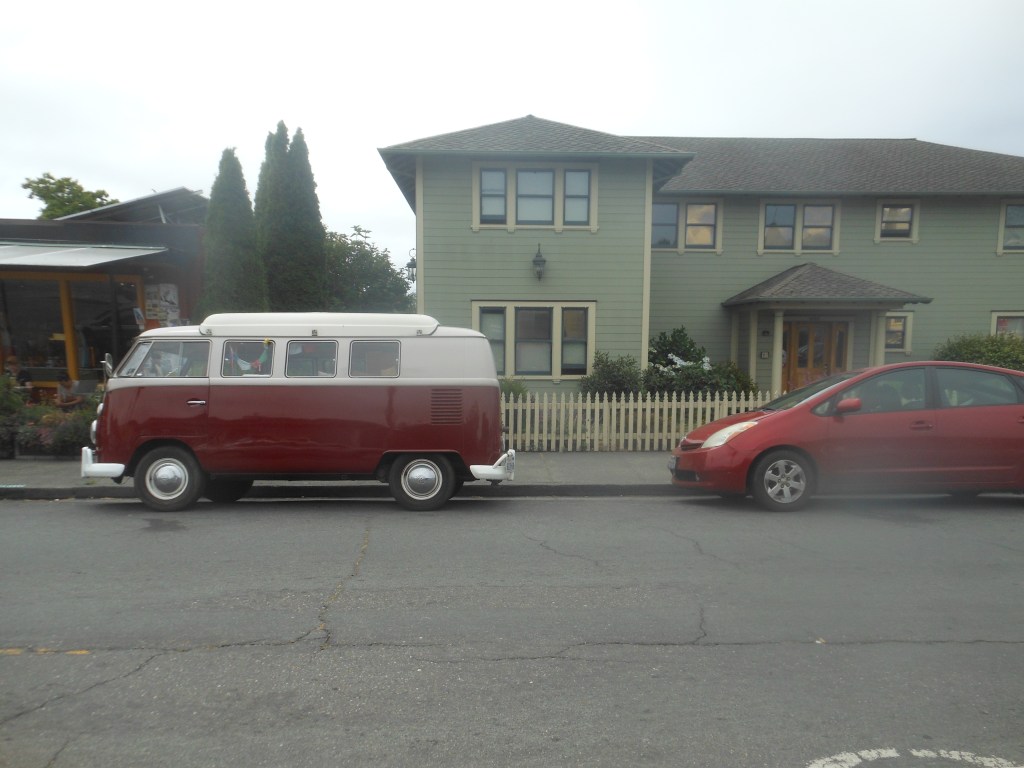
The Bus at Los Bagels, Arcata, CA
We first camped at Del Norte on our honeymoon, eating cold chili out of a can and locking it up in, sipping a little leftover champagne (well, me, anyway), from the wedding, and we have ended up there multiple times on many trips because there are always campsites to reserve, likely because folk don’t want to be eaten by bears. They take the bears seriously at Del Norte, which has led me to believe they have serious bears, and they even go so far as to have you sign a waiver when checking in saying you have been warned about THE BEARS, which I assume is to preclude being sued when a bear attacks a camper. There are also signs in the bathrooms and kiosks, sometimes even documenting a recent bear, kind of like a mugshot, and they have the serious bear safes for your food and excess smelly stuff.
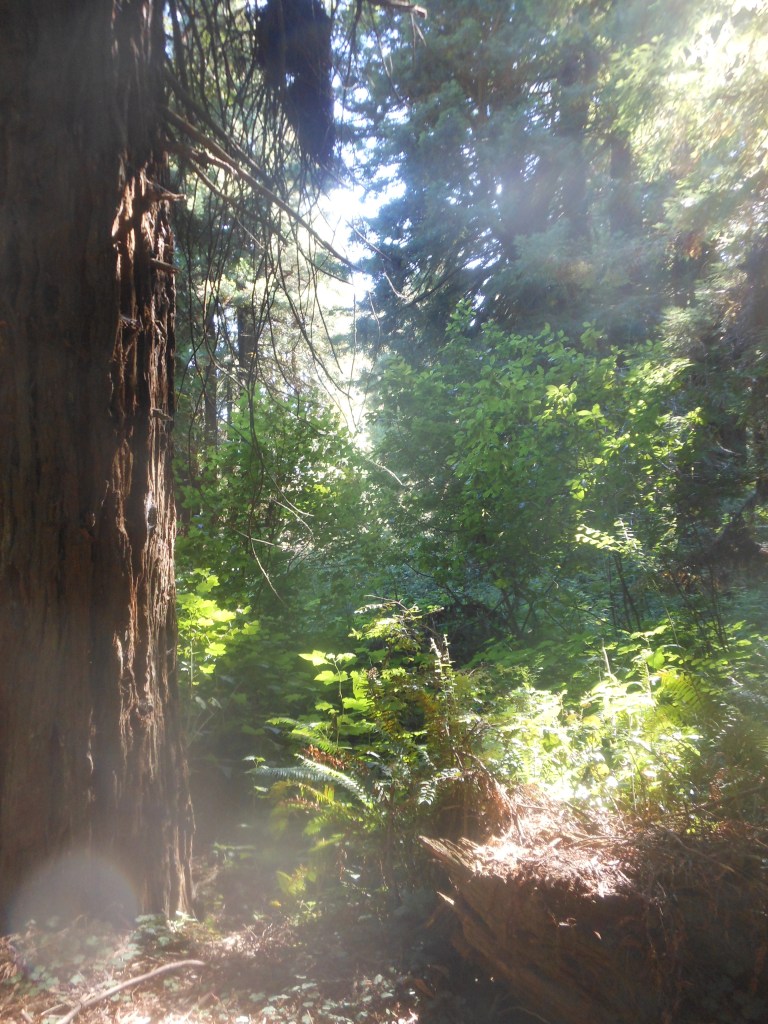
Driving through the Redwoods with paranoia
Many years ago I read a book about a woman who had her face eaten by a bear and ever since then any bear camping provokes bearanoia for me, always exacerbated in Del Norte. Because of this bear fear, I convinced Robert that we should take our time, check out other campsites on the way, see if any had room, and so we had lovely drives around Trinidad and Patrick’s Point
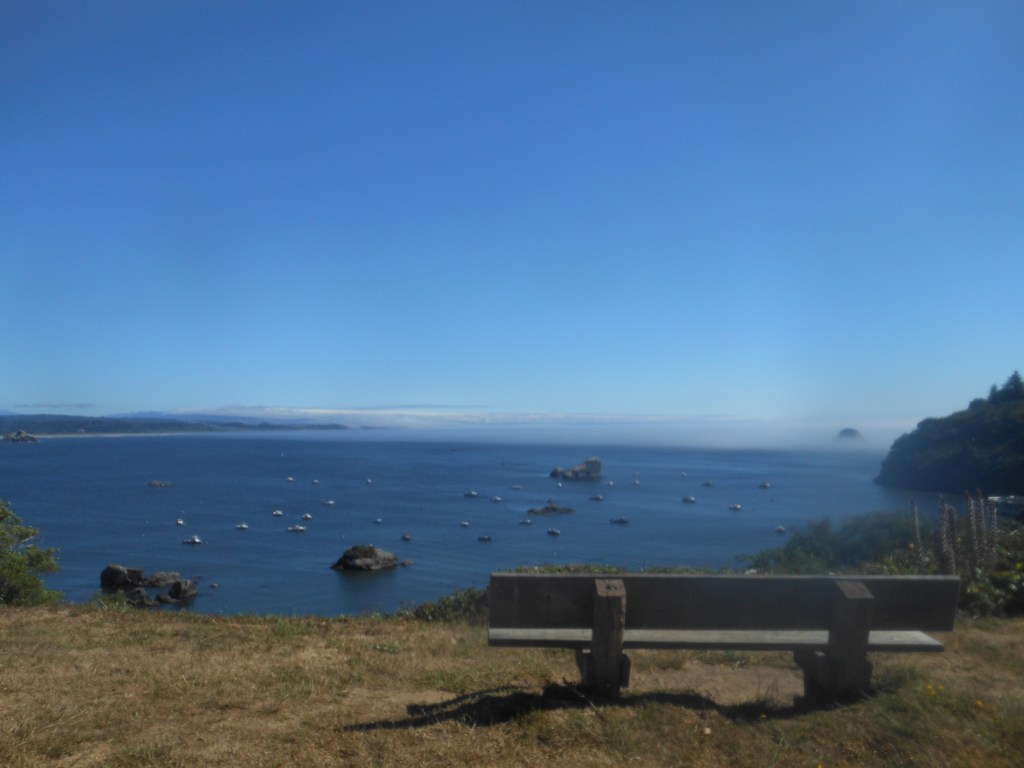
and even into Prairie Creek, where we saw no bears, some elk, and no vacancies. Right before we climbed got to Del Norte we took a lovely sideroad along the Klamath river to check out some private camps, but while they had vacancy, they also had prominent and recently xeroxed bear signs posted, and no bear lockers, so we went on to Del Norte.
We drove the long, long way (it is two miles that feel like 10) into the deeply forested campground, a little surprised that no one was in the camping kiosk to make us sign the bear waiver or to tell us where our site was, and this campground, always dark, felt darker still as the dusk was coming. We tried to get service on the phone, and had some luck, but the one e-mail that wouldn’t open seemed to be the one we needed, so we decided to drive the loops and look for our name on a site because the state parks always put our reservation signs with names. Around and around we drove in the deepening dusk, squinting, reading name after name, but never our name. “Let’s just go to Crescent City,” I said, for it was late and we were tired, and I wanted to avoid the bears. Robert finally agreed, so we drove the long way out of the canyon, back to the 101, and then down the hill into Crescent City. Just before we got to the town Robert made a sudden turn left into a motel parking lot. “I saw the sign said vacancy,” he said, and yes, they had a room, and then we were in Room 7.
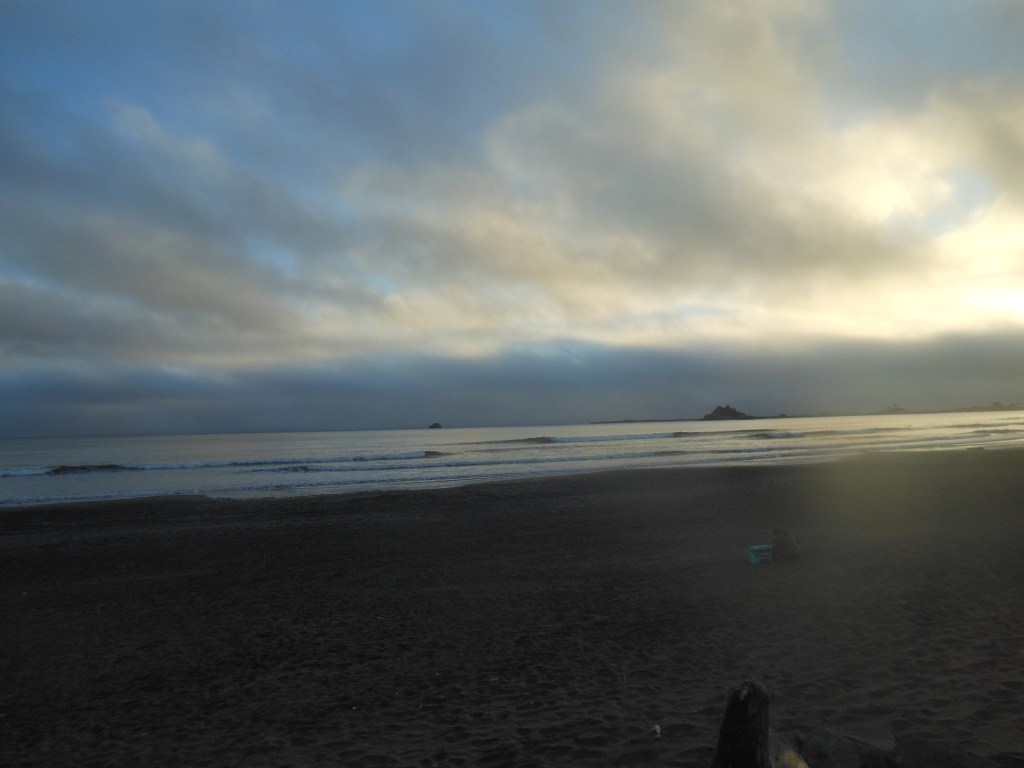
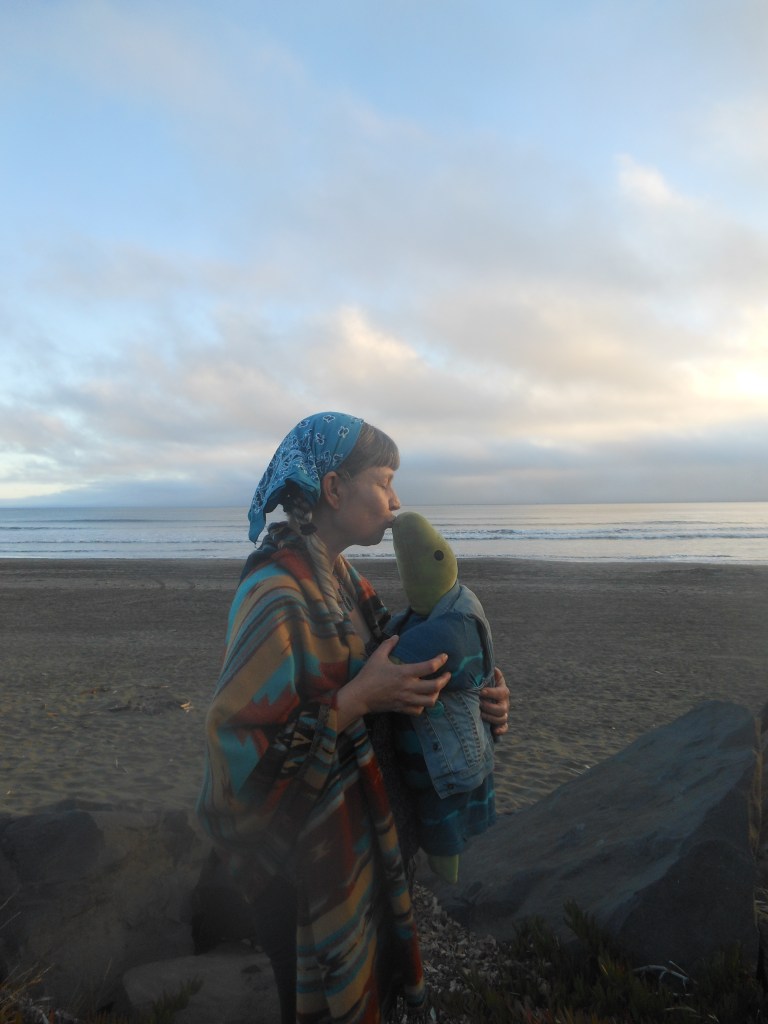
How to describe being so happy to land and where we had landed? We saw the giant beach outside the sliding doors, the setting sun like a giant piece of calendar art, and we had a perfect moment that turned into a perfect evening. Squishy the sea turtle, our traveling companion, agreed to cease complaining for the duration of the trip and said only this, “Robert is the man!” and we rejoiced in travelers landed, no bears, and also no food, but after yet another picnic in the hotel room dinner, we decided to go out by the beach to practice songs for the memorial, where a man was smoking weed on the beach, but we decided he wouldn’t mind, and so we launched in, laughing and filled with a strange and sudden joy. There was something about singing from “Landslide,” “Can I sail through the changing ocean tides” with the surf booming as back up that marked the moment in my memory, a perfect moment, yes, but also more perfect because we knew it was perfect at the time.
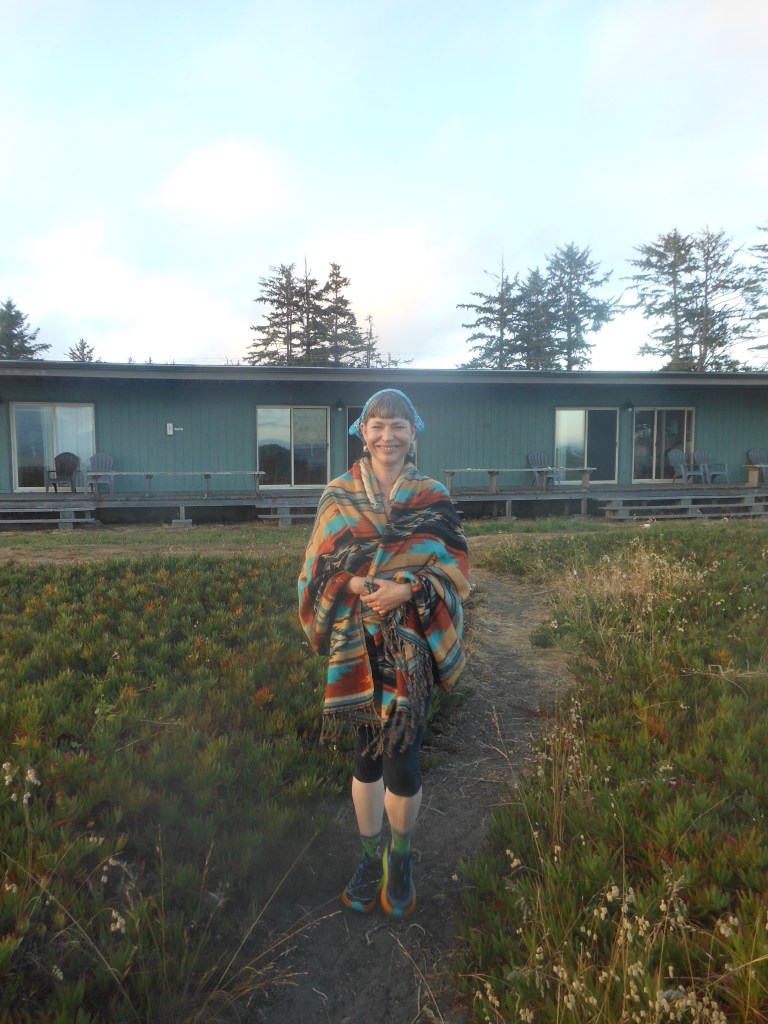
The weed guy said hello as he returned to his room, and mentioned in passing that he liked Hank Williams, and sure enough, reclining in bed, we heard the faint plinking strains of “Jambalaya” coming into our room, but we were tired and in love again, the way trips can bring you back to why you are with a person, and we were for once not worrying about gas, bears, or fear about the Bus or the memorial, and so we fell asleep listening to the sound of the waves so close to shore.
Links:
Scotia weird tourist site: https://www.visitredwoods.com/listing/scotia-the-company-town/396/
Scotia New Yorker article I didn’t read and is likely in my house:https://www.newyorker.com/news/us-journal/scotia-the-california-town-owned-by-a-new-york-investment-firm
Scotia article from a fee site about the New Yorker article: https://lostcoastoutpost.com/2024/jan/4/new-yorker-checks-scotia-still-transition/
About Hilt, a company town, Louise Wagenknecht’s awesome book: https://osupress.oregonstate.edu/book/white-poplar-black-locust
Los Bagels in Arcata, should you be in the neighborhood: https://www.losbagels.com/
 This Bus Could Be Our Life