July 27, 2024
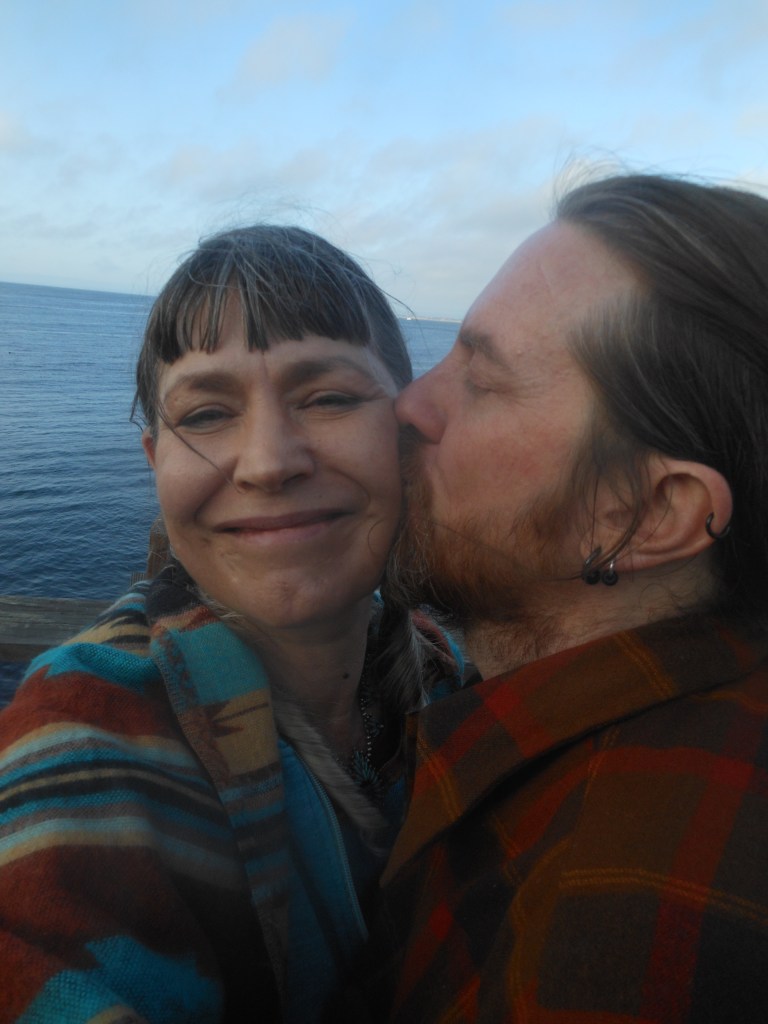
There’s this old song by one of my favorite singers, Townes Van Zandt, where he sings of “To live is to fly/ low and high/so shake the dust off of your wings/ And the sleep out of your eyes,” and that became my song for this day, a day when we flew above mountains, ventured low and high, and had some of the lowest and highest points of the trip. We were shaking the dust off of our wings and getting ready to fly.
We got on the road “Bright and ugly,” as Jim would have said, and the cool weather held as we rolled north through Santa Maria and Nipomo and into San Luis Obispo. It was gorgeous Bus driving weather, sunny and cool, very unusual for this time of year. After getting supplies in SLO, extra probiotics for my bloated stomach, we hit the road heading for the Cuesta Grade. I’d had a bad experience on the grade years before in my elderly Volvo, Buttercup, so I’ve avoided it for years, but we figured if the Bus could do the Siskiyou Summit and Rattlesnake Mountain, he could do the Cuesta, one of the most expensive and highest parts of the rail line, and he did take it like a champ, albeit at 35 miles an hour.

Then we found ourselves rolling through the long valley, rolling into Steinbeck country, as I always think of it, for I was a Steinbeck fan from a young age, and I told Robert of my youthful frustration with The Red Pony (the pony dies early in the very short book) and of how Steinbeck had described these very hills and the wet valley of the Salinas river, fuller than usual this year.

At lunchtime we stopped in King City, a town with an incredible choice of Mexican food—Sinaloa! Oaxacan! Mazatlán! —and Robert decided on fish tacos, so I settled in the van to read Kathleen Hanna’s book, Riot Girl, and wait. And wait. And wait. We had parked across the street in the shady trees by the high school, so I couldn’t see what was going on, but I devolved into paranoia, helped by some local folks, but mostly my fault, and after 45 minutes Robert emerged triumphant, bearing food, and we had the first of the great fish tacos of the trip, exactly like the ones I had eaten in Baja years ago, but King City is pretty close to Monterey, land of fish. Then we were back on the highway in the gusty wind.
Previous trips had led us to want to avoid Salinas, and I had always wanted to take a little backroad to Carmel I first traveled with my friend Bob, so I directed Robert to the G-16, a meandering country road that would, eventually, take us to the coast.

As we drove out on a farm road with no traffic through housing tracts, I worried that I was taking us on what Robert calls “Not a trail,” for my penchant when walking or hiking to take trails that are not trails, leading us to nowhere, but Robert seemed game, and so we set out. The two young boys jogging on the road were surprised to see us roiling on by, but they gave us thumbs up, and then we were off.
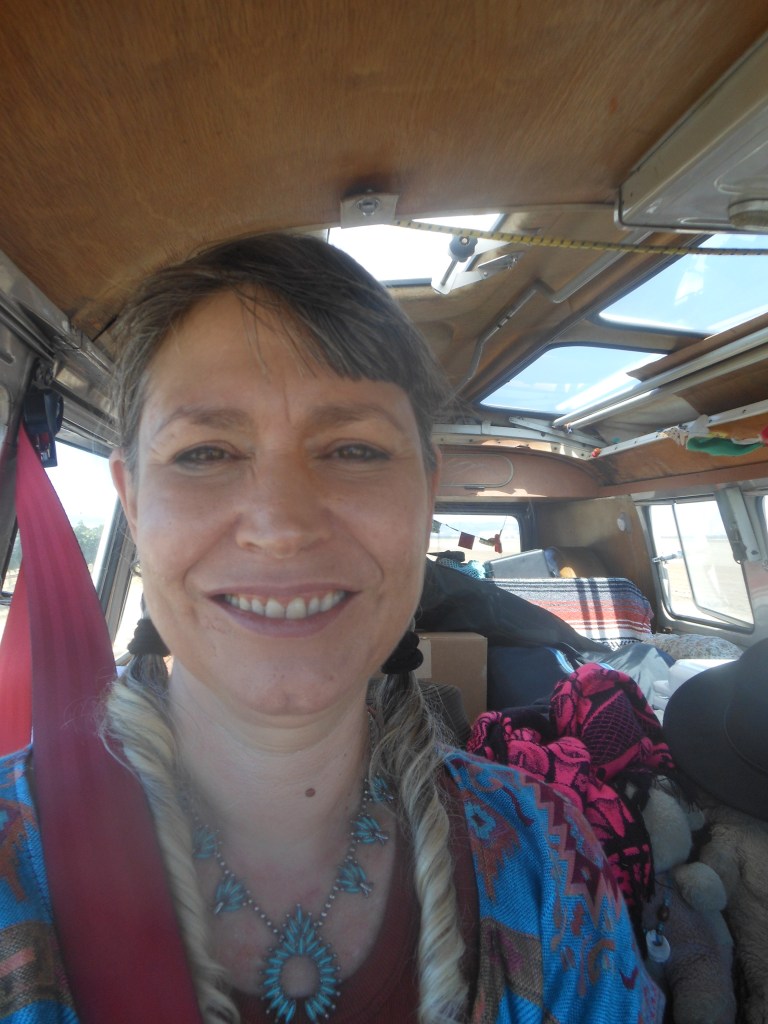
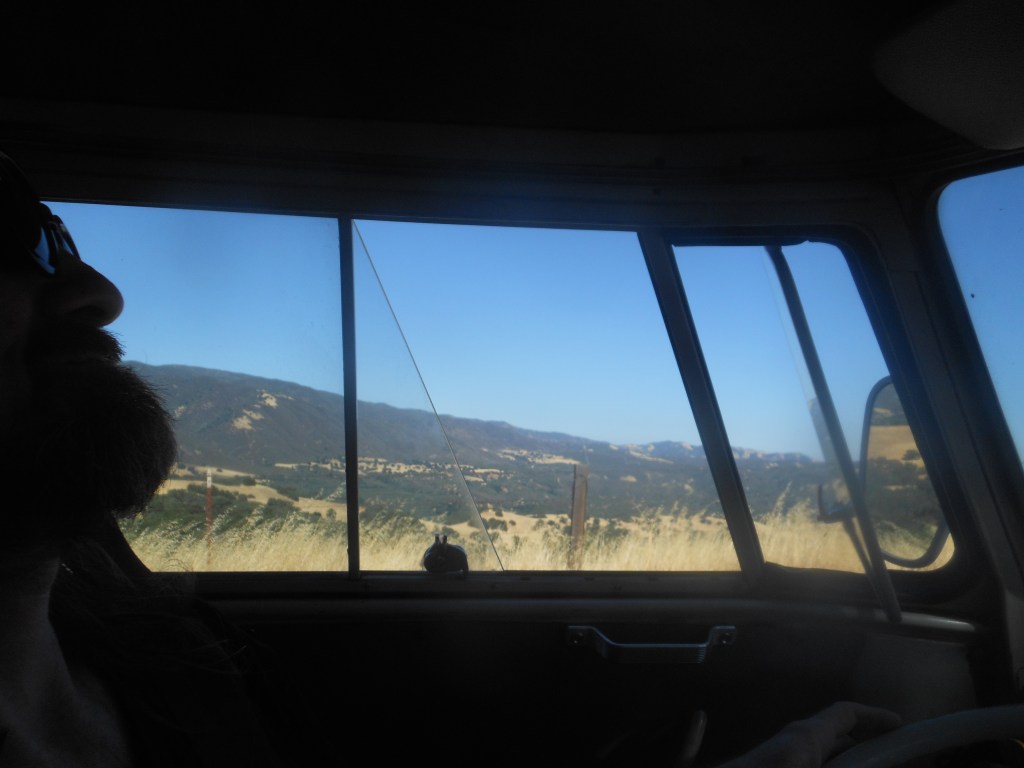
It was a twisty little gem of a road, through vineyards and cutting into canyons, crossing and old bridge, the folks frolicking in the river below also surprised to see the old Red Bus rolling by, lifting their hands to wave as we crossed the green and one lane bridge. The road was a beauty, narrow, meandering through oak groves, the golden, rolling hills of California offering sweeping vistas under blue skies. We talked and told stories of other roads, and climbed the ridges, our only company being hawks and turkey vultures.

Coming down through a valley called the Arroyo Seco on one of the infrequent and battered signs, we saw a gleaming black SUV with a flat tire, a man underneath, the family standing by the vineyard with water bottles. “Should we stop?” Robert asked, but he was already pulling up alongside because part of being a Bus Pilot is always stopping to offer help in case you might need it one day. The man under the car laughed, said we were the first folks who had stopped, and said he was OK, so we rolled on. About a half a mile past, Robert said he should have offered his impact driver, so we swung around and returned. They got the tire changed fast, and the man was full of thanks.
In fact, he told Robert he owned a winery called “J-Lo,” as Robert reported it to me, and we should stop by their vineyard and tell them “Manny sent you,” and get as much free wine as we wanted. When Robert told me this I laughed because I knew J. Lohr, not J-Lo, does indeed have a Chardonnay called Arroyo Seco, a wine I enjoy myself. The meeting with Manny, however, reminded me of another Manny, a man who helped us when we broke down on the PCH just outside Zuma in our first year of owning the Bus, so I felt by helping this new Manny we were simply repaying an old cosmic debt, and we did not stop by for any free wine. We did not, however, anticipate foreshadowing, that insidious force in all travel tales and life.

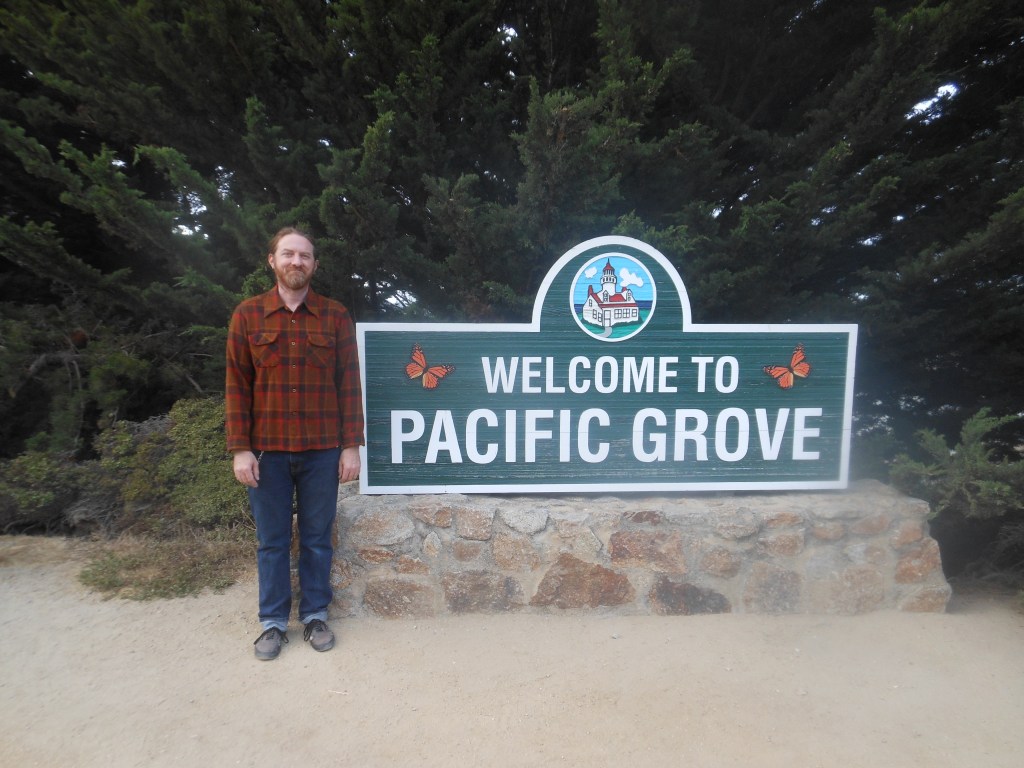
The good Old G-16 took us through weird canyons and ridges and then the houses got nicer and fancier, as evidenced by expensive gates, and then we were in the Land of the Rich People, AKA Carmel Valley. I kept thinking, “How can some people have so much and some so little” as we arrived in Carmel proper. After some confusion with our map and the best way to get to Pacific Grove, a spatial confusion regarding Pacific Grove that would persist, we arrived at Borg’s by the beach at Lover’s Point.
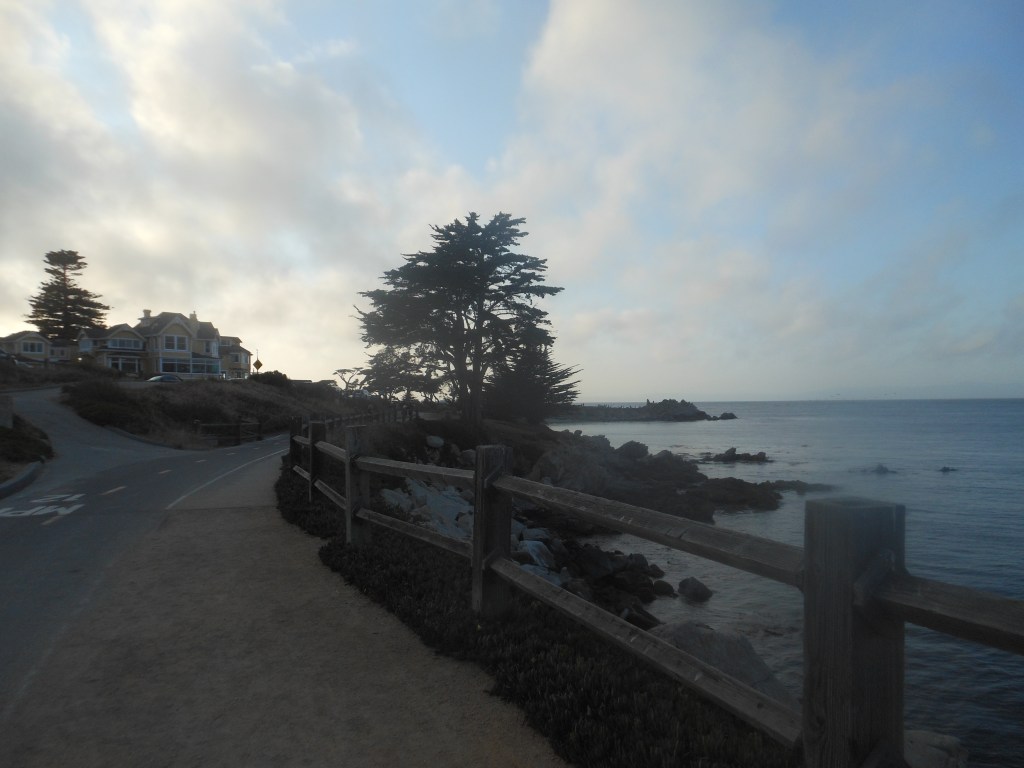
We stay at Borg’s partly because of my friend Bob, who vacationed there every summer with his wife, and partly because it is a place to travel back in time. The same people have been booking rooms at Borg’s for many years, I suspect, and you can’t get a room online. When you do call for a reservation they actually mail you a receipt, and in my Luddite, non-cellphone, embracing of the old, this is a place I love, although they do not have actual room keys like some of the places we stayed, and the key cards at Borg’s make a particular little unhappy whine, although that may be colored by my experience on this trip.
At Borg’s there is no fancy stuff like a mini fridge or a microwave, although they do have vintage tiled showers, and there are no 3-pronged outlets, and the Wi-Fi is 2.4. Gigahertz, or, in other words, no Wi Fi. You can hear the seagulls all day long, but it is cheap, clean, and close to the ocean, and for me, oddly comforting, for I can always imagine Big Bob there. “For value, you can’t beat Borg’s!” he would always say—and Robert later pointed out to me that this was their slogan on business cards—and getting my terrible coffee in the faded lobby in the morning it was easy for me to imagine Bob there doing the same.
Once we arrived at Borg’s we got set up, and Robert talked Bus with a lovely couple, Dominique and Joe, and I felt excited to be in Pacific Grove again listening to the incessant seagulls. However, my stomach was terrible, and I was pretty sure I had diverticulitis, so I spent an uncomfortable time on the phone with Kaiser, planning to head to an Urgent Care in Watsonville or San Francisco the next day, sorry that my stomach was making a mess of the trip, but determined to make the best of it.

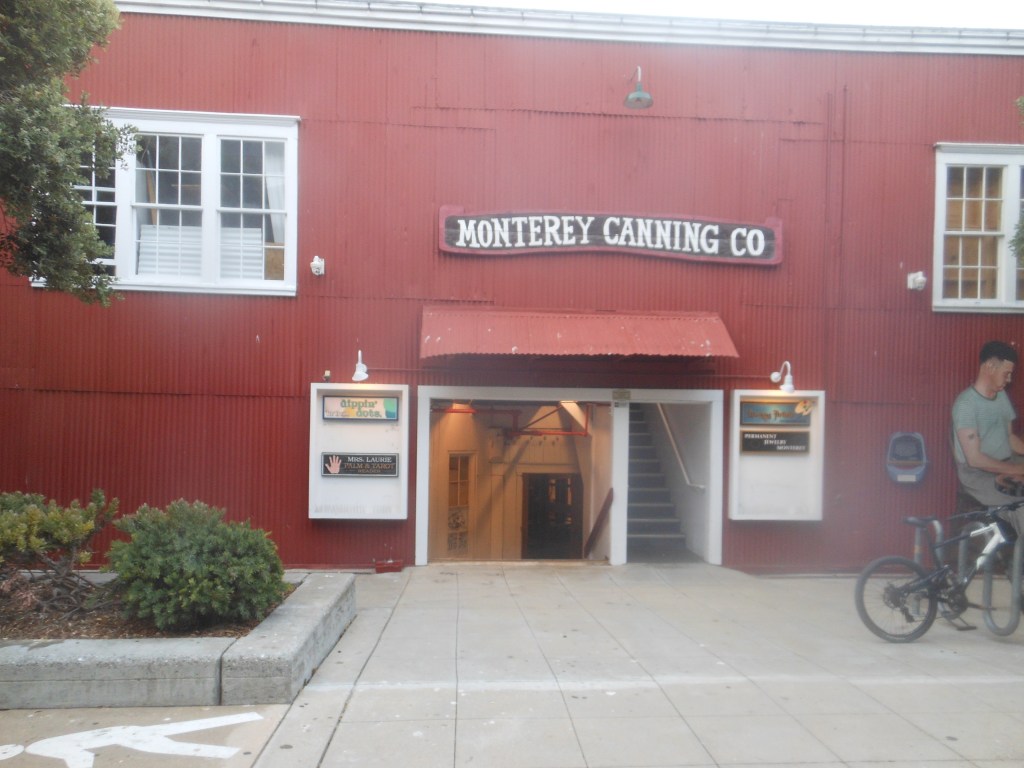
The first time I went to Cannery Row was the in the 80’s, when the Monterey Bay Aquarium first opened, and my best friend Tirian’s family took me there as a birthday gift because they knew how much I loved Steinbeck, and it was a glorious trip. Robert and I visited the aquarium on our honeymoon, using the cash Dad and Paula had given us to pay the entrance fees, but although we had stayed at Borg’s on the last Dad trip, we had never returned to Cannery Row, preferring to walk by the beach, through the town searching for coffee, and becoming entranced with a VW shop in an old Quonset hut. We had certainly never experienced Cannery Row on a Saturday night in tourist season before, but now we were walking through it.
There was live music in multiple venues, lots and lots of people, all kinds of people, and the place felt like Disneyland: Look, it’s a Bubba Gump’s! Look, you can buy lots of stuff! We were tired and I was full of stomach stress, and the whole thing was interesting in a sort of anthropological way, and then we saw an unobtrusive sign saying “Doc’s Lab” and pointing towards the Bay.
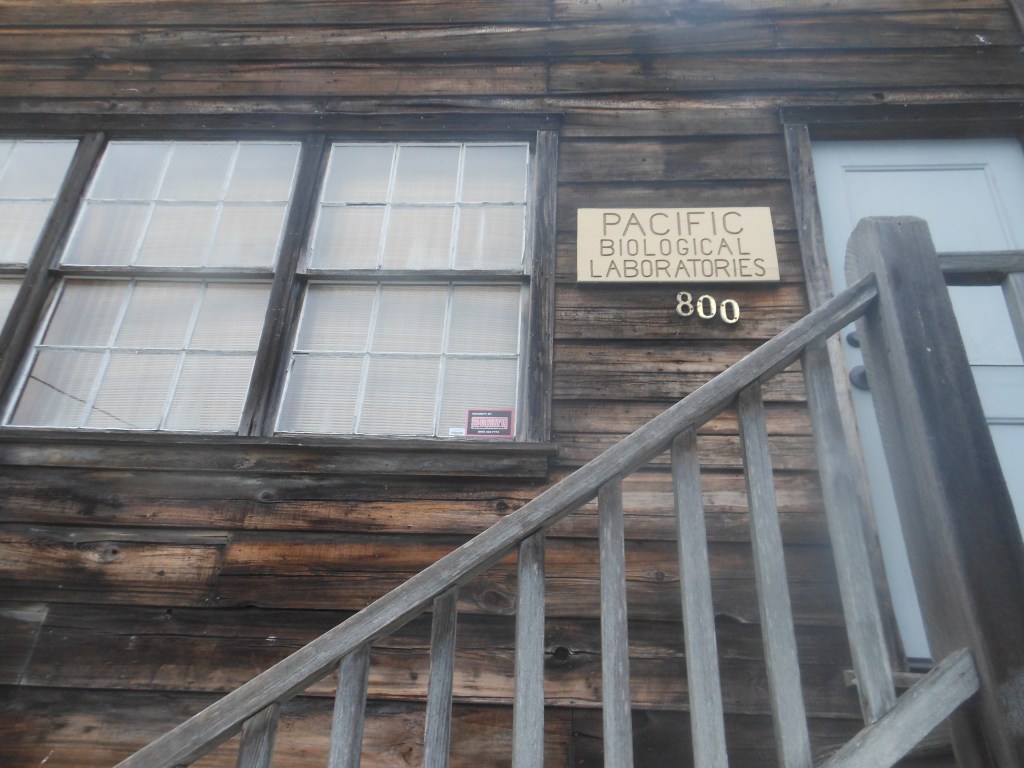
One of the most thoughtful gifts my father ever gave me when I was a teenager and in my throes of Steinbeck worship was a book by Edward “Doc” Ricketts. In a display case in my office, surrounded by beach combing finds, is his gift, a first edition of Between Pacific Tides, the very same edition the Monterey Bay Aquarium had in their Doc Rickett’s space when we visited on our honeymoon.
We walked back through an alley next to some kind of hotel…and there it was: Doc’s lab, complete with the concrete pools he used to study his beloved creatures from the pacific tides.
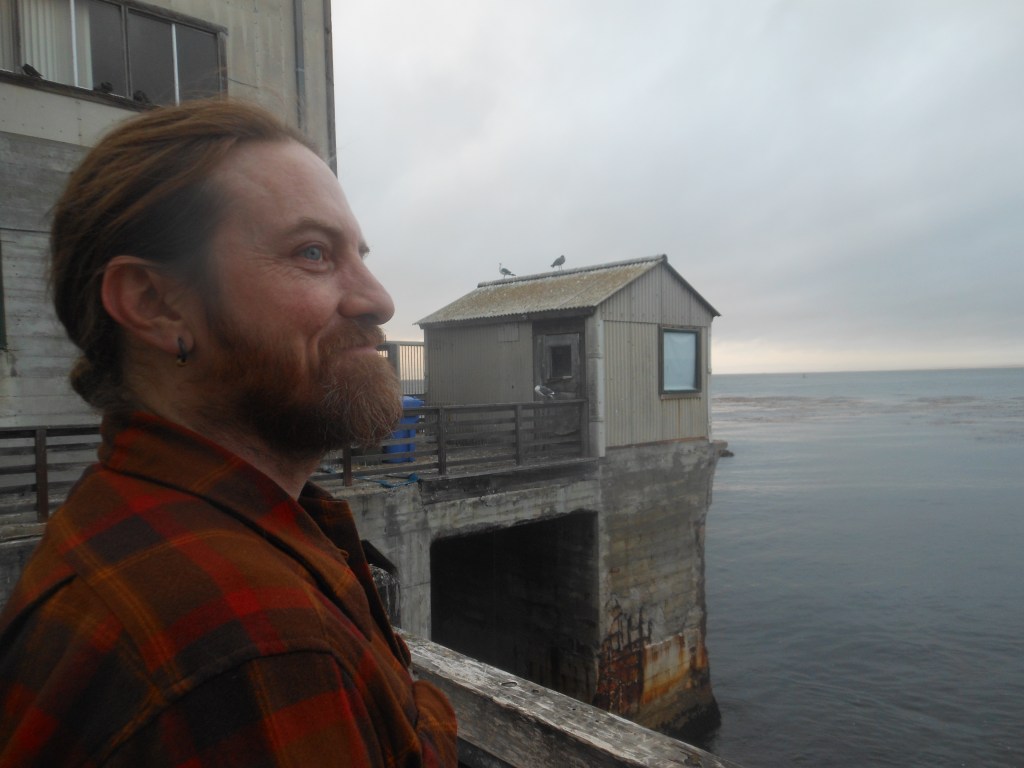

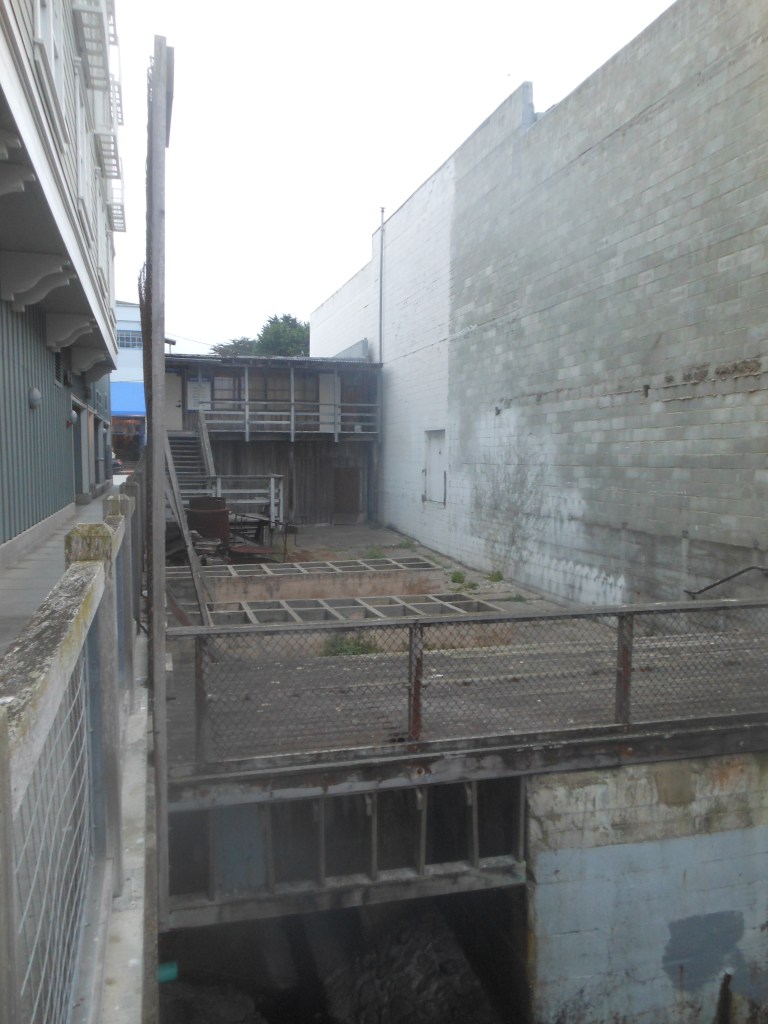
It was one of the first absolutely magical moments of the trip, a time and space when you know you are being blessed. But we were hungry and tired. We took some more photos with various Steinbeckian spots, and I contemplated grabbing a toddler’s listing clam chowder bread bowl, but we made our way on.
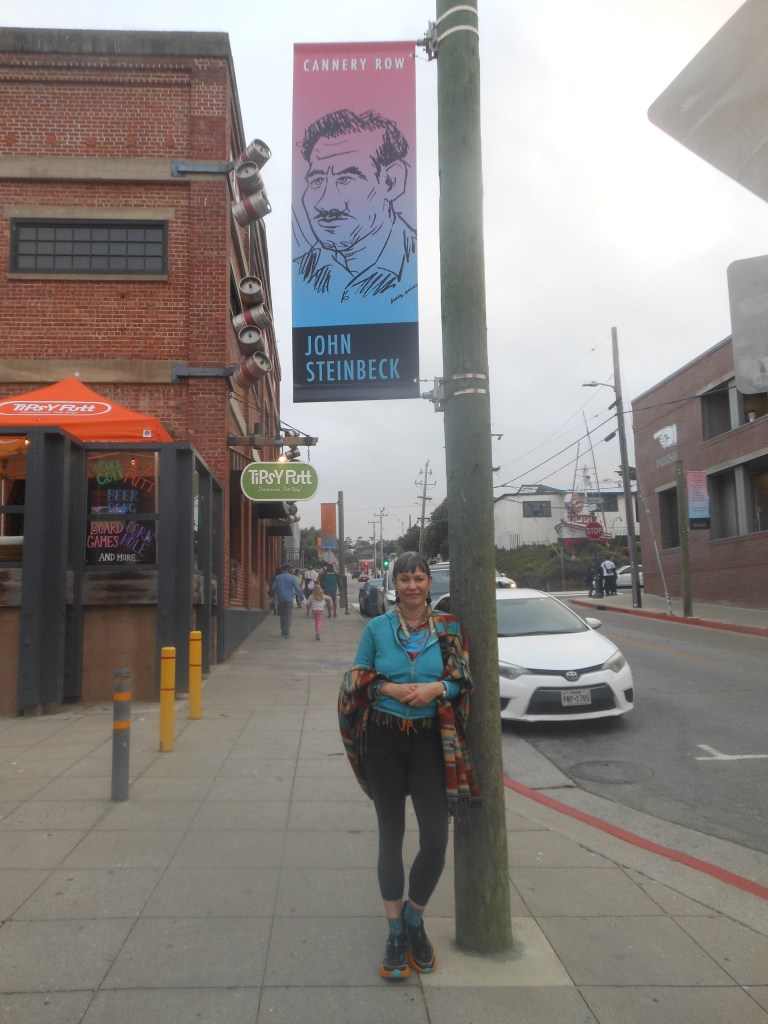

My father worked for Bechtel and it was his work for that company that allowed him to go to New Zealand, work on the Manapouri dam, and buy the Bus, then eventually meet my mother at Bechtel in San Francisco where she was a secretary, and so I thought we needed a picture of this, for my family and the Bechtel family are indeed intertwines, though I doubt they know of us Hicks.

The tourist spots on Cannery Row did not appeal for the obvious reasons and because Robert is still not comfortable eating indoors, we made our way up to a main street to check out the options. It was dusk when we saw an Italian eatery with the now familiar Covid style outdoor seating, so we landed there. At first things seemed OK, because, yes, the table wobbled in the manner of all outdoor seating, but I wedged a handy piece of bark from a nearby planter under it, and then there was a man bring us water and, for me, wine. There was a young Aussie couple at the next table with a cute dog, and we busied ourselves ordering a dish I make at home, butternut squash ravioli with sage and grilled salmon, but then the trouble started.
Looking back, I can see that we were tired and hungry and weird, but at the moment this moment that should have been perfect was falling flat. I tried to interest Robert in conversation about anything, the trip, the punk rock book by Kathleen Hanna, the Cannery Row stuff, but Robert was paying attention to the Aussie’s dog. Eventually, they became uncomfortable with his incursions into their space, and I became, well, enraged. I didn’t want to be a couple who couldn’t talk, and as every conversational balloon went flat, as all that we could discuss was the dog, I lost it. I had not had a meltdown like this in years, but then there I was, digging at my wrists with my nails, saying I wanted to go home, fuck this trip and my dear husband and everything else.
And then the food arrived. To say it was inedible is a compliment. Somehow the fried sage and brown butter crumbs of the dish I make was drowned in a sea of oily and syrupy butter with too much sugar from the candied pecans, and the salmon was so fishy I would be burping it up all night. By this time, Robert had figured out that I was upset, and we stalked away from the restaurant as fast as we could, stopping to appreciate a very unique VW Bus on the way home. My feet pounded that pavement in quaint Pacific Grove, angry, angry, angry, but also scared about my stomach and the trip and my marriage. I explained how I felt and apologized, and Robert explained that he had been tired and hungry and then he apologized, and then we were back at Borg’s, and we agreed to see what the next day would bring, maybe Kaiser, maybe going home, but some part of me was looking forward to the day of driving up Highway 1, San Francisco and Burmese food, and Samuel P. Taylor State Park in the redwoods I love.
I am still sorry for my breakdown, that I doubted Robert’s love, and I know now more than ever that was wrong, but this was the low in the day of low and high, and I, of course, now know the rest of the story.
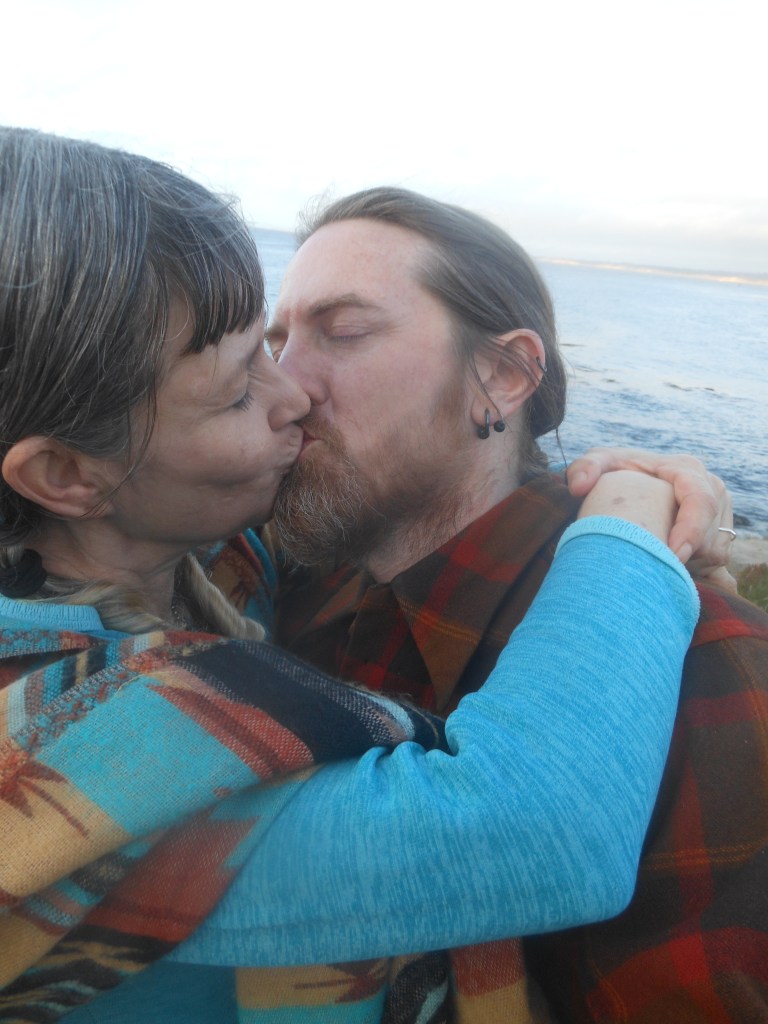
 This Bus Could Be Our Life